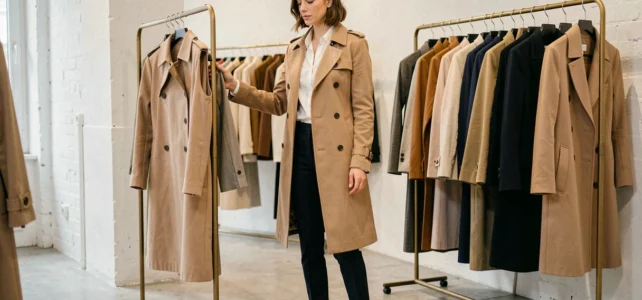
Fashion trends in everyday life are not just about replicating runway shows. Elevating one’s style involves a precise understanding of materials, cuts, and regulatory constraints that reshape the textile offerings available in France. We have been observing a structural shift for several seasons: the rapid rotation of collections is giving way to pieces designed to last, and this movement is accelerating due to new legal obligations.
Textile Regulation and Its Impact on Available Fashion Trends
The European regulation on the eco-design of sustainable products (ESPR) has made it illegal for large companies to destroy unsold clothing, shoes, and accessories since July 2026. Medium-sized enterprises will have to comply by 2030. This constraint directly modifies the collections offered in stores.
In practical terms, brands are producing more adjusted volumes and favoring long-lasting pieces. French law goes further by banning any advertising for brands classified as fast fashion, including through influencers, and imposing awareness messages about reuse. The criteria selected (range width, encouragement of repair) target players relying on ultra-fast collection rotation without penalizing generalist French brands.
To keep up with these developments and their repercussions on wardrobes, the fashion section on Espace Forme et Beauté provides regular updates on pieces that combine style and durability.
Access to ultra-cheap trends will be restricted, prompting a rethink of how to build a wardrobe around reliable materials and timeless cuts rather than seasonal accumulation.
Materials and Weights: What Distinguishes a Durable Piece from a Disposable Purchase
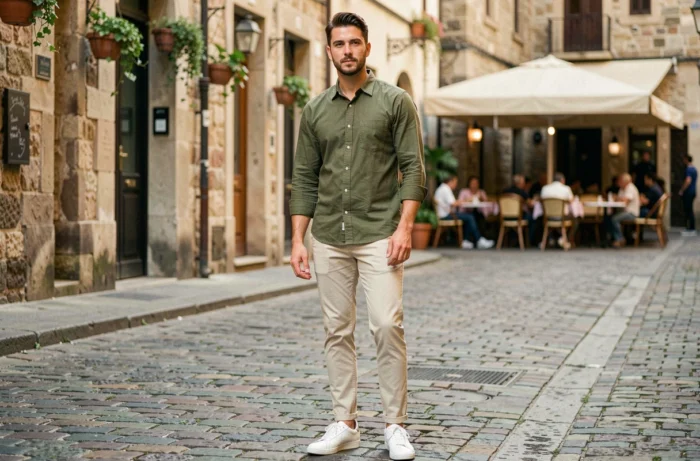
We recommend systematically checking the composition before any purchase. A piece intended to elevate everyday life should have a sufficiently dense weight to maintain its shape after dozens of washes. Combed cotton, European linen, and wool-cashmere blends remain reliable choices for structured pieces (blazers, trousers, shirts).
Recycled polyester is gaining ground in linings and technical garments, but its relevance depends on the context. On a fluid dress worn in summer, lightweight recycled polyester works. On a winter sweater, it leads to premature pilling.
- Combed or mercerized cotton for t-shirts and shirts: better abrasion resistance, smoother touch, color retention superior to classic carded cotton
- Washed linen for spring-summer pieces: natural wrinkling is part of the drape, no ironing needed, the fiber strengthens over time
- Extra-fine merino wool for fall-winter knits: thermoregulating, odor-resistant, machine washable on a delicate cycle
- EcoVero or Tencel Lyocell viscose for dresses and blouses: cellulosic fibers with traceable production circuits, fluidity comparable to silk
Checking the composition label takes only a few seconds. It is the most cost-effective action to build a coherent everyday style.
Seasonal Colors and Personal Palette: Avoiding the Trap of the Total Trend Look
Adopting a trendy color without considering one’s own palette amounts to following a fashion trend without visual results. Burgundy and chocolate dominate the fall-winter offerings, while ecru and khaki are establishing themselves as new neutrals. These shades work as a base, not as a totality.
We observe that the most accomplished everyday looks combine a single strong piece in a seasonal color with personal basics already mastered. A burgundy blazer over raw straight jeans and a white t-shirt creates a sharp contrast. Multiplying trendy pieces in one outfit dilutes the impact.
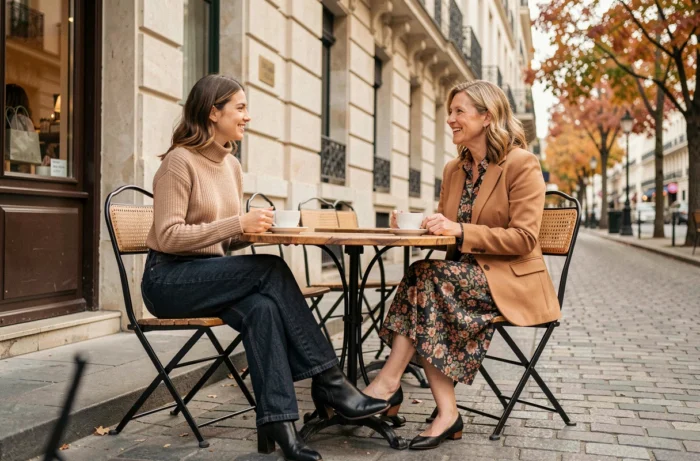
For prints, geometric patterns and asymmetrical stripes modernize a back-to-school outfit without risk. One print per outfit is enough to create a focal point. The rest of the silhouette remains solid to avoid visual overload.
Adapting Color Trends to Your Existing Wardrobe
Before buying a piece in the current color, mentally place it next to five pieces already in your wardrobe. If it only combines with one, its cost per wear will be too high. The most cost-effective trendy colors are those that work with your usual neutrals (navy, gray, black, off-white).
Structuring Pieces for an Effortless Everyday Style
The blazer remains the most versatile piece in the wardrobe. Its ability to transform a basic jean into a constructed outfit is unmatched. We recommend a slightly padded model, in a sufficiently heavy fabric to drape without wrinkling, in a neutral color or burgundy to capture the season’s trend.
The midi skirt and fluid trousers are gradually replacing slim fits in everyday silhouettes. The looser drape is more forgiving in terms of body shape and adapts better to temperature variations with layering.
- Structured wool blend blazer: the piece that instantly elevates the perceived level of an outfit
- Mid-rise straight jeans: the most stable cut from season to season, compatible with all tops
- Fluid material blouse (Lyocell viscose or washed silk): adds movement without sacrificing overall structure
- Ribbed knit sweater: an alternative to sweatshirts that maintains a dressed-up look
Each structuring piece should be combinable with at least three other elements in the wardrobe. This is the criterion that separates a useful purchase from an impulsive one.
Second-Hand and Reuse: An Underestimated Style Lever
Thrift shopping now appeals to all generations. This purchasing channel allows access to higher quality pieces (genuine leather, virgin wool, careful craftsmanship) at prices compatible with a daily budget. Older materials, often denser than current production, age better.
A well-selected second-hand garment protects both style and budget. The key lies in inspecting seams, buttonholes, and fiber elasticity. A fabric that has retained its drape after years of wear proves its quality better than any marketing label.
Building a solid everyday style does not require renewing your wardrobe every season. A few well-chosen pieces, in reliable materials and proven cuts, are enough to absorb trends without depending on them.