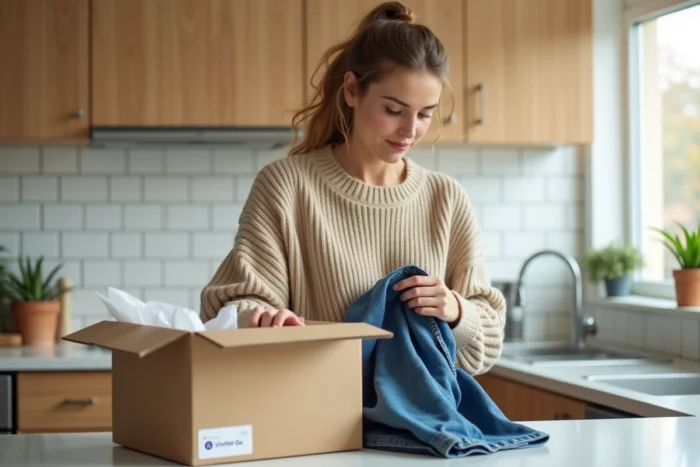
The Vinted Go network relies on a hybrid logistics architecture, combining automatic lockers, local business drop-off points, and, in certain areas, home delivery. The promise of speed depends less on the displayed carrier than on the slowest link in the chain: sorting in the warehouse, congestion at the pickup point, distance between the regional hub and the destination locker. Understanding these mechanisms allows for anticipating discrepancies between the announced delivery time and the actual time.
Logistical links that extend the delivery time of a Vinted Go package
A shipment via Vinted Go goes through at least three stages before reaching the recipient: drop-off by the seller at the shipping point, transportation to a regional sorting hub, and then redirection to the buyer’s collection point. Each transition generates an unavoidable latency period.
The most underestimated factor remains the pickup time at the drop-off point. A drop-off point at a bakery or dry cleaner does not immediately scan the receipt. The package may sit for several hours, sometimes a day, before a collector arrives. Automatic lockers, on the other hand, trigger an almost instant scan, which shortens the initial latency window.
We observe that the opening of an additional logistics site in France, announced for 2026, aims precisely to reduce the average distance between the sorting hub and the pickup point. This densification of the processing network should, in the long run, shave off a few hours from the intermediate segment of the chain. To better understand Vinted Go delivery times in 2026, this infrastructure element must be integrated into the analysis.
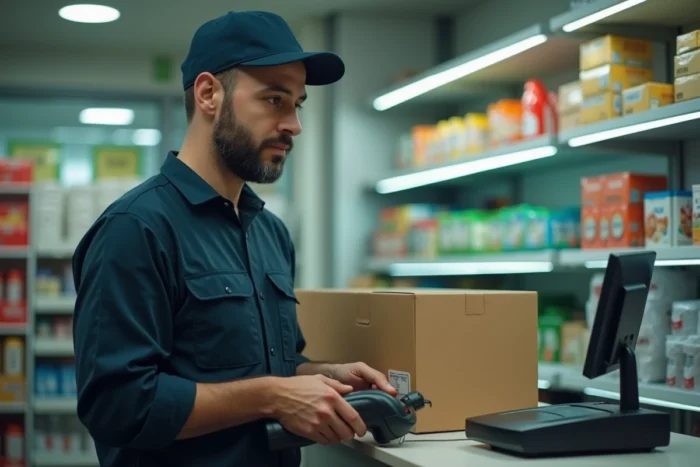
Automatic locker or drop-off point: impact on pickup time
The type of collection point chosen by the buyer significantly alters the perceived delivery time. An automatic locker notifies the buyer as soon as the package is dropped off, with a pickup code sent in real-time. The retrieval window is broad, often accessible outside of business hours.
A traditional drop-off point operates differently. The merchant receives packages in batches, registers them manually, and the notification to the buyer depends on the speed of this processing. A delay of half a day between physical receipt and notification is not uncommon.
The expansion of the Vinted Go locker network, documented by several local sources in 2026, reflects a desire to gradually shift towards a model where pickup from lockers becomes the standard rather than the exception. This shift has a direct effect on the consistency of delivery times: less human variability, less lag between package arrival and availability for the buyer.
Congestion at pickup points in dense areas
In urban areas, a popular drop-off point can reach its storage capacity, forcing the carrier to redirect the package to a more distant secondary point. This rerouting adds an additional delay and complicates tracking for the buyer, who sometimes sees their package change destination mid-route.
Automatic lockers are not spared: a full locker blocks drop-off until a space becomes available. We recommend that regular buyers prioritize low-traffic pickup points, identifiable by the absence of reported queues in local reviews.
Cross-border Vinted Go packages: a separate delivery time variable
Transactions between European countries on Vinted represent a growing share of shipments. Crossing a border adds a customs step or, at a minimum, a transfer between two national logistics networks partnered with Vinted Go.
- Sorting takes place at the hub of the country of origin, then the package is transferred to a hub in the destination country before local redistribution.
- The new tax on small packages that came into effect on March 1, 2026, impacts cross-border flows and may generate additional checks at the border.
- Tracking of the receipt sometimes switches between two distinct tracking systems, creating a blind spot of several hours where the package status is not updated.
Cross-border shipments extend the delivery time by several days compared to a domestic shipment. This reality is structural and does not depend on the performance of Vinted Go as such, but on the fragmentation of last-mile networks between countries.

Tracking the receipt and notifications: what skews the perception of delivery time
The time perceived by the buyer does not always correspond to the actual transport time. The Vinted Go notification system relies on the successive scans of the package at each stage. A missed or delayed scan creates the impression of a package being stationary when it is in transit.
Three common situations skew perception:
- The seller drops off the package at a drop-off point, but the initial scan is only performed when the carrier collects it, sometimes the next day.
- The transfer between two regional hubs does not always generate an intermediate tracking event, leaving a gap in updates.
- The pickup code is sent after the merchant manually registers it at the drop-off point, not at the time of physical delivery at the location.
The transport time and the notification time are two distinct timelines. Buyers who check the tracking several times a day often interpret a scan delay as a delivery delay.
Optimizing your reception window
Choosing a pickup point equipped with an automatic locker eliminates most delays related to manual processing. Checking that the selected drop-off point still accepts packages (no “full” mention in the app) avoids last-minute rerouting.
The expansion of the Vinted Go logistics network in France for 2026, combined with the increase in lockers, should reduce the gaps between announced delivery times and actual delivery times. The main friction point remains the first link, that of the seller’s drop-off, over which neither the platform nor the delivery service has direct control.