
A refrigerator with warm side walls can often cause legitimate concern. The heat felt on the sides of the appliance is part of the normal operation of a refrigeration circuit, but it can also indicate an installation or maintenance issue. Understanding the thermal mechanics at play allows one to distinguish between normal heating and overheating that can damage the compressor and increase electricity bills.
Thermal circuit of the refrigerator: where the heat extracted from food goes
A fridge does not produce cold. It moves heat from the inside of the enclosure to the outside, using a refrigerant that circulates in a closed loop. The evaporator, located behind the inner wall, absorbs heat from the food. The compressor then compresses the gas, which significantly raises its temperature.
The condenser is then responsible for dissipating this heat to the ambient air. In older models, it takes the form of a visible black grille at the back. In most current refrigerators, the condenser is integrated into the side walls. Metal tubes run along the sides of the appliance, and this is exactly why the sides become warm, sometimes noticeably so.
This design has an advantage: it increases the surface area for heat dissipation and eliminates the bulky rear grille. The downside is that any obstruction to heat evacuation directly results in abnormal heating of the walls. For more explanations on Expertise Maison, the described mechanism is based on the same thermodynamic principle.
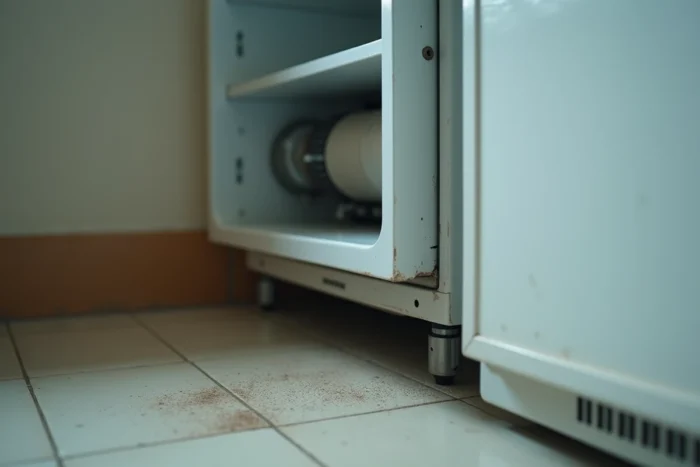
Ambient temperature and lack of ventilation: the two most common aggravating factors
The heat of the walls increases in proportion to the effort required from the compressor. Two common situations cause the refrigeration cycle to run longer than expected.
High ambient heat
During periods of high heat, the gap between the internal temperature of the fridge and the room air widens. The compressor must run longer to maintain the set temperature, and the condenser dissipates more heat. The walls then rise significantly in temperature. According to several reports from technicians, a fridge installed in a south-facing kitchen can see its sides exceed 40 °C in summer without indicating a malfunction.
The reflex to lower the thermostat to compensate for the heatwave is counterproductive. The compressor runs continuously, consumption skyrockets, and the risk of breakdown increases. Keeping the thermostat at a moderate setting remains the most commonly shared recommendation by manufacturers.
Appliance pressed against the wall or built-in without clearance
A refrigerator with sides touching a cabinet or wall prevents the natural convection of air around the condenser. Heat stagnates, the walls overheat, and the compressor compensates by extending its cycles. Leaving a few centimeters of free space on the sides and at the back is enough to restore proper dissipation.
- Check that the fridge is not built into a niche closed on three sides, without high and low ventilation grilles
- Keep the appliance away from any direct heat source (oven, radiator, sunny window)
- Ensure that the rear grille or lower base is not obstructed by accumulated dust
Clogged condenser and worn door seal: when wall heat indicates a real problem
Beyond installation, certain maintenance defects turn normal heating into chronic overheating.
Clogging of the condenser
Dust, pet hair, and kitchen grease gradually accumulate on the fins of the condenser (at the back or under the appliance, depending on the models). This insulating layer reduces the dissipation capacity. The compressor compensates by running more, which further heats the walls. Cleaning the condenser once or twice a year with a fine nozzle vacuum or a long brush limits this phenomenon.
Defective door seal
A seal that no longer ensures tightness allows warm air to enter continuously. The compressor hardly ever stops, and the walls remain warm continuously. A simple test: close the door on a sheet of paper. If it slides out easily, the seal is no longer making proper contact. Replacing a seal is inexpensive compared to the damage caused by a constantly stressed compressor.

Refrigerants and F-Gas regulation: a parameter to monitor on recent appliances
Refrigerators sold today primarily use fluids with low global warming potential, in accordance with the revision of the European F-Gas regulation adopted in 2024. This transition requires manufacturers to use refrigerants that are more sensitive to installation conditions.
As of January 1, 2032, the maintenance of fixed refrigeration equipment with fluorinated fluids with a GWP of 750 or higher will be prohibited, unless using regenerated or recycled fluid. For domestic appliances, the practical consequence remains indirect: new refrigerants operate at different pressures and condensation temperatures, which can alter the heat perceived on the walls.
Field reports vary on this point. Some technicians report slightly warmer walls on recent models operating with isobutane (R-600a), while others observe no notable difference. The most determining factor remains the installation: a properly ventilated appliance dissipates its heat without difficulty, regardless of the fluid used.
When to call a professional for a fridge that is overheating
Not all warm walls justify a call to the repairman. A few criteria help to sort them out.
- The walls are warm and the fridge maintains its set temperature: normal operation, no intervention needed
- The walls are hot to the touch and the compressor runs continuously: first check ventilation, the seal, and the cleanliness of the condenser
- Food is no longer cold enough despite a correctly set thermostat: a refrigerant leak or a failing compressor requires the intervention of a refrigeration technician
- An unusual noise accompanies the overheating: the compressor may be at the end of its life, and continuing to stress the appliance risks damaging other components
Before replacing a refrigerator with warm walls, checking the space around the appliance, cleaning the condenser, and inspecting the door seal resolves most cases. Lateral heat is part of the thermodynamic operation of any modern fridge, and only persistent overheating accompanied by a drop in performance should raise alarms.