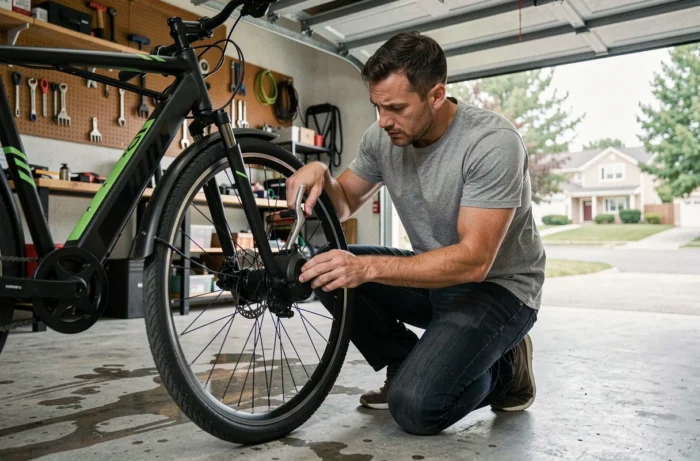
An electric assistance bike from Decathlon that cuts off assistance for no reason, a screen displaying an error code, or a battery that refuses to charge: these malfunctions often occur after several months of regular use. Identifying the nature of the malfunction before taking any action can save time and avoid an unnecessary trip to the workshop.
Assistance cut-off and error code: identify the issue before acting
The majority of reported malfunctions on Decathlon e-bikes involve intermittent cut-offs of electric assistance. The bike operates normally, then the assistance suddenly cuts off for a few seconds or permanently.
This type of malfunction is most often caused by a poor connection between the battery and its housing, a loose connector, or a dirty pedal sensor. Before making an appointment at the workshop, three simple checks can resolve the issue:
- Remove the battery, clean the metal contacts with a dry cloth, then firmly replace it until it clicks into place.
- Completely turn off the system (screen and battery), wait about thirty seconds, then turn it back on: this complete restart resets the controller and clears some temporary error codes.
- Visually check the condition of the visible cables along the frame, especially those near the bottom bracket or stem, where repeated friction can damage the casing.
When a error code appears on the dashboard screen, note it down precisely. Each model (Riverside, Rockrider, Elops) uses specific codes documented in the manual or on Decathlon’s support portal. This code directly guides the technician to the faulty component: motor, battery, sensor, or controller.
If a problem with a Decathlon electric bike persists after these checks, a trip to the workshop becomes the next logical step.
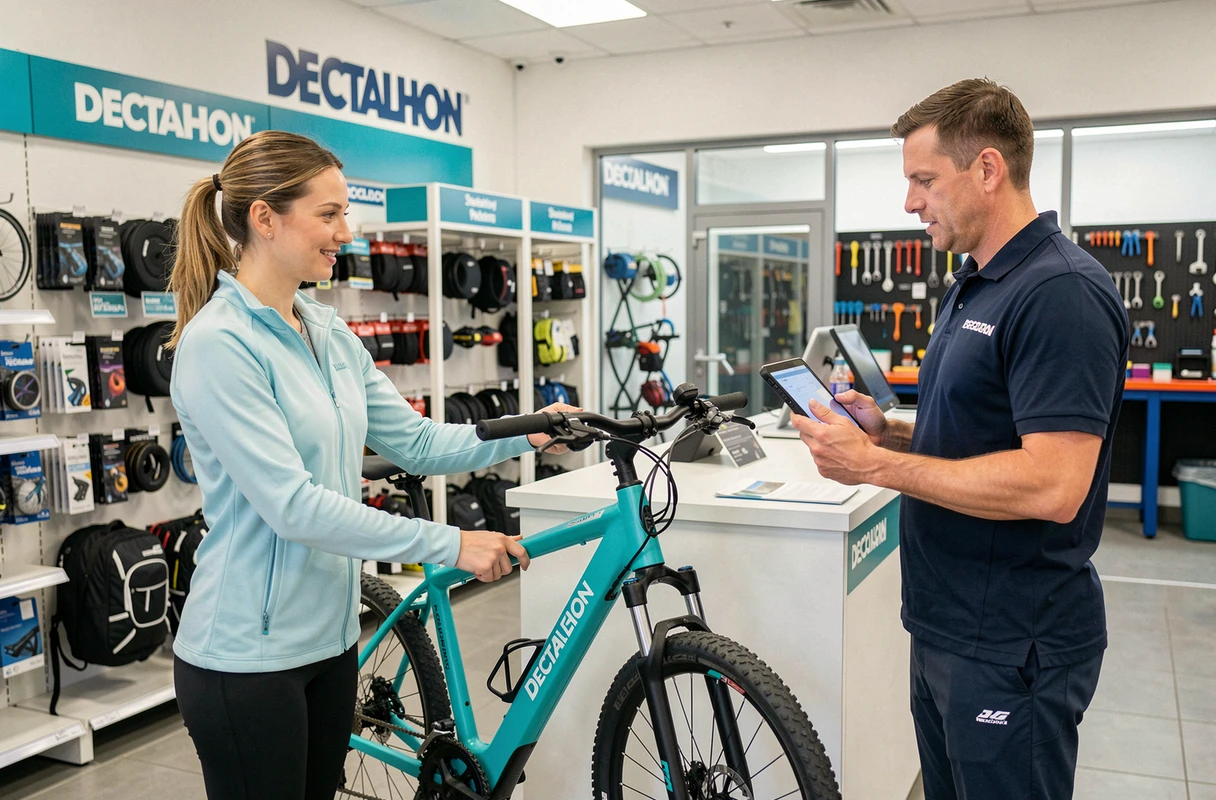
Decathlon workshop diagnosis: process for handling and booking
Decathlon has structured its electric bike after-sales service into several distinct processes based on the type of intervention. This organization distinguishes routine maintenance (brakes, transmission, tires) from specific electrical diagnostics for e-bikes (battery, motor, controller, screen).
Online booking is now available in many stores. It allows you to choose a time slot for a diagnosis or revision without having to go in blindly. The portal support.decathlon.fr allows you to find your purchases through your customer account, which speeds up the identification of the model and its components.
What the workshop diagnosis covers
The in-store diagnosis generally includes a complete test of the electrical system: checking the battery voltage, testing the motor under load, reading error codes via the manufacturer tool, and checking connectors. This step helps distinguish a clear hardware failure from a simple connection issue.
A software update of the controller or screen can also correct certain malfunctions. Decathlon offers this type of intervention, often unknown to users who think directly about replacing a component.
Electric bike battery: common failures and preservation tips
The battery remains the most expensive component of an e-bike and the one that generates the most after-sales requests. Two situations frequently arise: the battery that no longer charges at all, and the one whose range has notably decreased.
A battery that refuses to charge may suffer from a charger issue rather than cell problems. Testing with another compatible charger (in-store, for example) allows for quickly ruling out this hypothesis. If the charger works, the malfunction likely comes from the BMS (battery management system), the internal circuit that protects the cells.
For gradual loss of range, recent technical guides converge towards more refined preservation practices than a simple annual revision:
- Store the battery between 30% and 70% charge when the bike is not used for several weeks, never fully discharged or at 100%.
- Avoid systematic full charges: partial recharging after each ride better preserves lithium-ion cells.
- Do not expose the battery to extreme temperatures, especially prolonged sub-zero cold, which temporarily reduces capacity and accelerates aging.
These precautions can significantly extend the battery’s lifespan, a point that is all the more relevant since replacement represents a significant portion of the total cost of the bike.

Repairability index and repair obligation: what the regulations say
French regulations on the repairability index concern certain electric bikes. This system requires manufacturers to make spare parts and technical documentation available for a defined period after the product is launched.
In practice, when a Decathlon e-bike is covered by this obligation, the seller cannot simply refuse repair on the grounds that the model is no longer marketed. Spare parts (motor, battery, controller, screen) must remain accessible. This regulatory lever provides an alternative to the outright replacement of the bike, especially for models a few years old whose manufacturer warranty has expired.
Spare parts and independent workshops
If the Decathlon workshop cannot intervene within a reasonable timeframe, networks of independent workshops specializing in e-bikes can handle Decathlon models. They work on the same components (motors, batteries, transmissions) and sometimes have shorter intervention times than integrated workshops, especially during busy spring periods.
Before entrusting the bike to a third-party workshop, check that the intervention does not void the warranty if it is still active. For bikes out of warranty, the choice mainly depends on the availability of parts and labor costs.
The most effective reflex in the face of a malfunction remains to document the symptom precisely (error code, circumstances of occurrence, frequency) before any contact with customer service. A well-prepared diagnosis shortens the handling time and reduces the risk of leaving without a solution after the first visit to the workshop.