
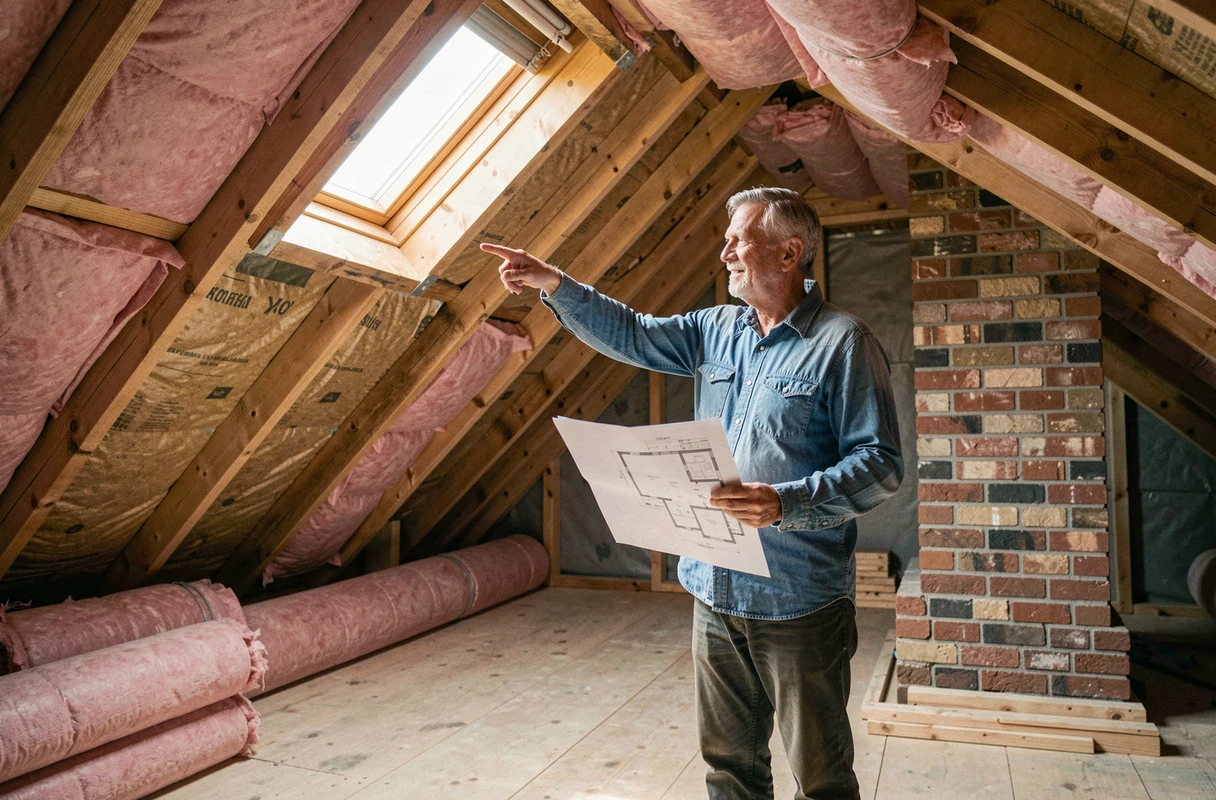
Converting attics creates living space, but this space comes with a tax cost that is best anticipated. Between the form to fill out, the deadlines to meet, and the taxes that follow, each step modifies the rental value of the property. Comparing the obligations based on the nature of the work allows for a precise measurement of what changes on the tax notice.
Urban planning thresholds and tax obligations based on created area
The type of administrative procedure directly depends on the created floor area and the location of the property. Competitors often mention a single threshold, but the reality varies depending on whether the house is located in an area covered by a local urban plan (PLU).
| Created area | Outside PLU area | In PLU area (individual house) |
|---|---|---|
| Less than 5 m² | No urban planning authorization required | No urban planning authorization required |
| 5 to 20 m² | Prior declaration of work required | Prior declaration of work required |
| 20 to 40 m² | Building permit required | Prior declaration (threshold raised to 40 m² in PLU area) |
| More than 40 m² | Building permit required | Building permit required |
This table shows a significant discrepancy: in PLU areas, an individual house can create up to 40 m² of living space in the attic with a simple prior declaration. Outside PLU, a building permit is required from 20 m².
Regardless of the urban planning procedure, the obligation to declare attics for tax purposes remains the same as soon as the space becomes habitable, meaning it has a ceiling height of at least 1.80 m.
Form H1 and online declaration: two pathways for the same obligation
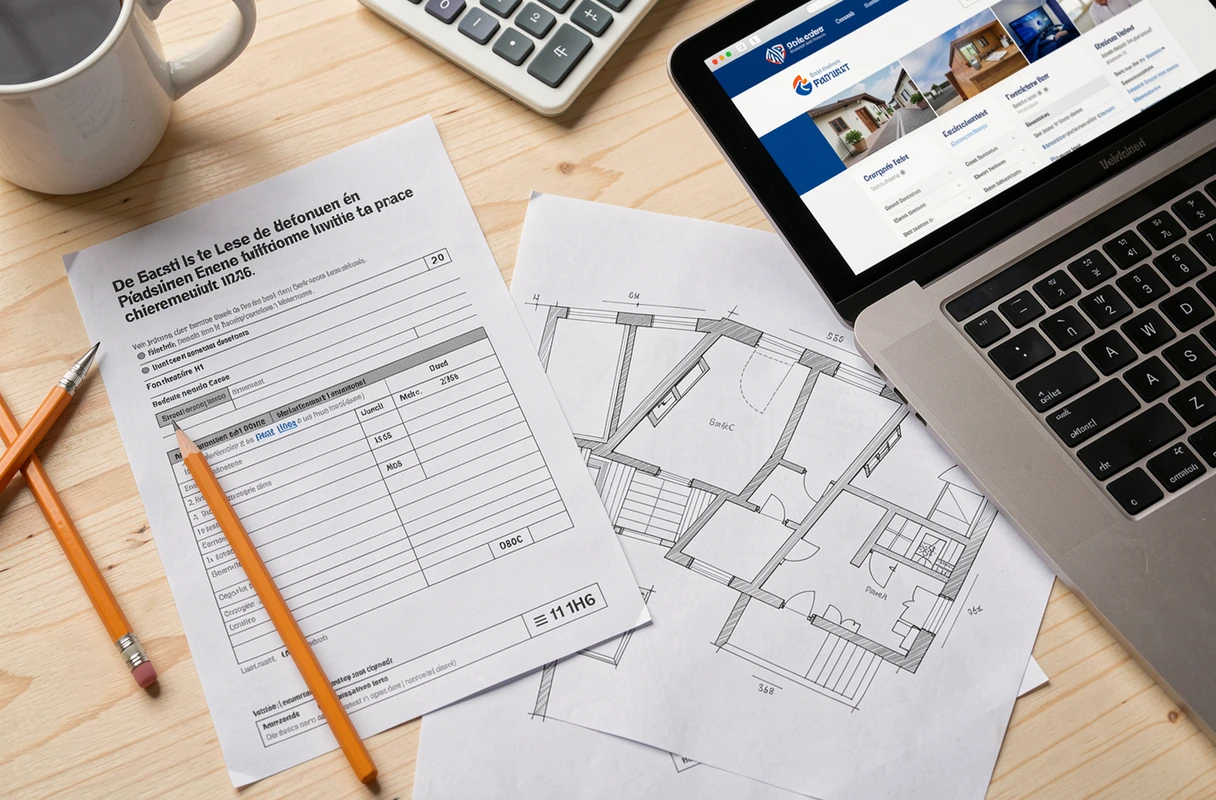
The tax declaration for converted attics goes through the form H1 (CERFA n°10867). This document allows the administration to recalculate the rental value of the property by incorporating the new living space. It must be submitted to the Service des Impôts des Particuliers (SIP) or the Centre des Impôts Foncier (CDIF) that oversees the housing.
However, the website impots.gouv.fr now offers an online service called “Real Estate” in the personal space. This service allows for updating the characteristics of a property (size, occupancy, dependencies) without solely relying on the paper form. Competitors rarely detail this digital alternative.
In the case of a roof elevation (modification of the roof structure to gain height), it is the IL form that replaces the H1. The distinction is important: converting existing attics falls under H1, while an elevation falls under IL.
What the H1 form specifically requires
- The actual area of the created rooms, measured at floor level, with the ceiling height indicated for each area
- The nature of the rooms (bedroom, office, bathroom) and the installed equipment (sanitary facilities, heating)
- The date of completion of the work, defined as the moment when the space is usable even if finishing touches remain to be done
- The insulation materials and type of roof windows, which are included in the calculation of the rental value
Each declared element directly modifies the amount of property tax. An attic converted into a master suite with a bathroom will weigh more than a simple storage space.
90-day deadline and temporary exemption from property tax
The owner has 90 days after the completion of the work to submit their declaration. This deadline starts from the moment the attics are usable, even if the painting is not finished or if the flooring is still missing.
Meeting this deadline is not only about compliance. The tax administration provides, unless otherwise decided by the local authority, a two-year exemption from property tax on the newly created part. This exemption applies to the municipal and inter-municipal portion of the property tax related to the added area.
The mechanism is conditional: if the municipality has decided to eliminate this exemption, it does not apply. It is necessary to check with the local land service before relying on this advantage. Conversely, exceeding the 90-day deadline automatically forfeits the benefit of the exemption, even if the municipality grants it.
Regularization after exceeding the deadline
An oversight or delay in declaration does not mean it is impossible to regularize. A late voluntary declaration is still possible and reduces penalties compared to a reassessment triggered by an audit. The administration can go back several years to recalculate the property tax owed on the undeclared area.
The financial risk is not limited to property tax. An undeclared attic conversion can also pose problems during a resale (inconsistency between the reported area and the cadastral area) or in the event of a disaster, if the insurance finds that the work was never declared.
Development tax and change of use: beyond attics
The development tax adds to other obligations. It is calculated on the taxable area created, multiplied by a fixed annual value set by decree, and then by the rates voted by the municipality and the department. This tax is due only once, at the time of issuing the urban planning authorization.
A often overlooked point: the declaration obligation applies to any change in the characteristics of the property, not just the creation of a living space. If the conversion of the attic also transforms an adjoining garage into a laundry room, or if a cellar is repurposed, these modifications must also be included in the declaration. The tax administration considers each change of use or characteristics as a distinct generating fact.
- Lost attics converted into a bedroom: H1 declaration required, impact on rental value
- Garage converted into a habitable room during the same project: additional declaration necessary
- Adding a roof window without modifying the living area: no tax declaration required, but prior urban planning declaration if the exterior appearance changes
The ceiling height of 1.80 m remains the determining criterion for the living area under the Carrez law. Parts of the attic located below this threshold are not counted, which can significantly reduce the declared area compared to the total floor area of the project.
The difference between taxable area and living area sometimes generates discrepancies on tax notices. Checking both calculations before submitting the form helps avoid an overvaluation that would inflate the property tax for years.