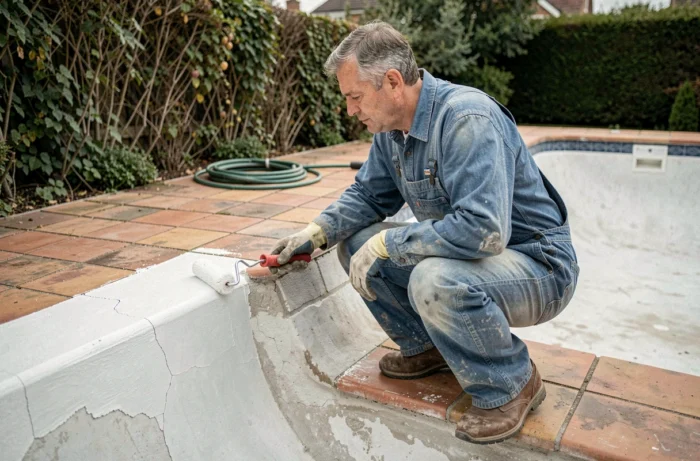
A pool showing signs of wear (dull lining, small cracks, noisy filtration) does not necessarily require demolition. Renovation targets the faulty components of the pool to restore waterproofing, performance, and visual appearance, without touching the supporting structure made of concrete or shell.
Localized repair without draining: intervene underwater
Most content on pool renovation describes heavy projects that require emptying the pool. On-site, several common interventions are performed directly underwater, without complete drainage.
Leaks at the skimmers, return fittings, or wall penetration joints can be treated with immersion-compatible sealants and epoxy adhesives. A small tear in a liner can be repaired using a self-adhesive patch applied underwater, provided the area is cleaned beforehand.
The benefits are twofold. The pool remains usable more quickly, and the structure does not undergo the mechanical stress of prolonged draining, which can cause the shell to lift or cracks in the concrete due to hydrostatic pressure from the ground. Exploring solutions for renovating a pool allows you to identify these techniques before embarking on a disproportionate project.
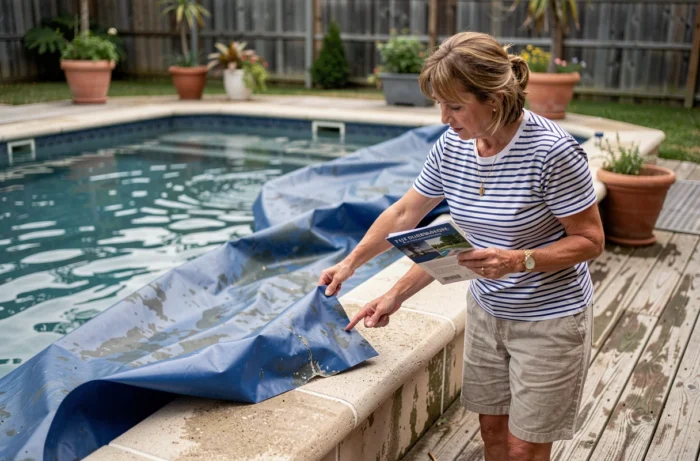
Reinforced 3D membrane and surface coatings: beyond the classic liner
The choice of coating affects both the waterproofing and the appearance of the pool in the long term. The liner remains the most common, but it is not the only option for renovation without replacing the structure.
Reinforced PVC and textured finishes
The reinforced PVC membrane differs from the liner in its composition: a polyester mesh sandwiched between two layers of PVC, custom-welded directly in the pool. Its rigidity allows it to conform to complex shapes (stairs, benches, submerged beaches) without creasing.
The so-called “3D” or textured versions reproduce stone, slate, or mosaic effects. The visual rendering gains depth compared to a solid-colored liner. This type of coating is particularly suitable for older concrete pools with slightly irregular walls, as the membrane absorbs them.
Coating and resin coating
For cracked concrete pools, a continuous resin coating applied with a roller or airless creates a homogeneous waterproofing layer. This technique covers micro-cracks without demolishing the existing support. The finish remains smooth and is available in several shades.
The silico-marble coating offers a matte mineral finish, more durable than traditional pool paint that chips after a few seasons. The choice between these materials depends on the condition of the support and the budget, but all avoid replacing the pool.
Energy retrofit of the technical room
Renovating your pool without modernizing the technical room is like changing the body of a car without touching the engine. The technical room houses the filtration, heating, and regulation: three areas that determine water, energy, and chemical consumption.
Variable speed pump and adapted filtration
Replacing a classic single-phase pump with a variable speed pump significantly reduces electricity consumption. The motor adjusts its speed based on the actual flow requirement, instead of running at full power continuously.
On the filter side, hydraulic compatibility matters: an aging sand filter can be replaced with a glass or diatomaceous earth filter, provided that the diameter of the pipes and the pump flow rate match. A professional checks this point during the preliminary diagnosis.
LED lighting and automated cover
Old-generation halogen lights consume a lot and heat the body of the light, which accelerates the wear of seals. Switching to LED lighting reduces light consumption and extends lifespan by several years.
The automatic cover limits evaporation and maintains temperature, which reduces the need for heating and water top-ups. In a pool exposed to wind or direct sunlight, the effect on the bill is measurable from the first season.
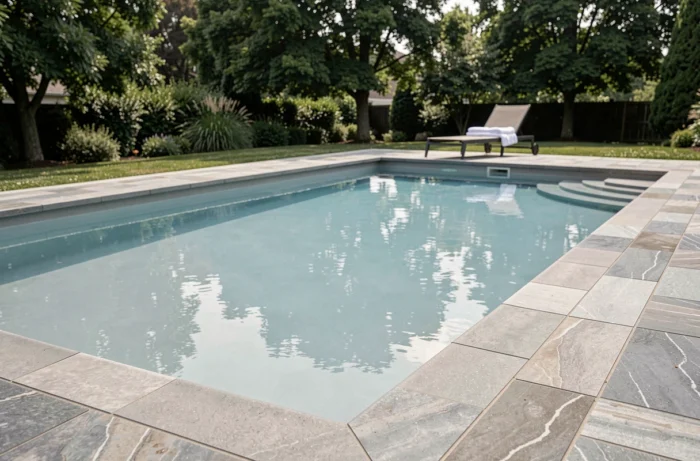
Connected regulation and centralized control
Connected regulation boxes continuously measure pH, disinfectant levels, and temperature. They automatically adjust product injection and filtration time. This type of equipment can be installed in an existing technical room, provided that the pump and filter are compatible.
The benefits go beyond comfort. A centralized control system detects water quality deviations before they cause limescale deposits or algae proliferation, two phenomena that accelerate the degradation of the coating. The renovation of the pool lasts longer when the water is properly regulated upstream.
Some systems also integrate the management of the cover, lighting, and heating from a mobile app. The entire pool can be controlled remotely, including programming filtration cycles during off-peak hours.
Pre-work diagnosis: points to check
Before choosing between a new coating, retrofitting the technical room, or a simple repair, a structural and technical diagnosis guides priorities. Here are the elements to inspect:
- The condition of the support: active cracks (which evolve) or passive cracks (stabilized), detachment of the coating, rust stains on exposed reinforcements. An active crack requires structural treatment before any coating.
- The hydraulic circuit: return pressure, actual pump flow rate, condition of valves and buried pipes. Abnormal pressure losses indicate clogging or a leak.
- Safety equipment: compliance of the barrier, alarm, or cover with current regulatory requirements. Renovation is an opportunity to bring the pool up to standard.
- The current coating: residual thickness of the liner, adhesion of the coating, presence of blisters or porous areas. These observations dictate the type of replacement coating.
This diagnosis, carried out by a pool professional or a study office, allows for prioritizing the work. Prioritizing waterproofing and filtration protects the investment made in aesthetics, which would come last.
Renovating an existing pool is cheaper and generates less waste than a total reconstruction. Current techniques (reinforced membrane, coating, variable speed pump, connected regulation) allow for recovering functionality and appearance in the vast majority of aging pools, provided the right diagnosis is made beforehand.