Brussels concentrates its best sunny spots in a few specific areas, and confusing them with simple café terraces means missing out on what makes the Belgian capital unique in terms of urban sunshine. Facade orientation, rooftop altitude, and greening of surroundings: the places to enjoy the sun in Brussels are not all equal.
Accessible rooftops in Brussels: access criteria and regulatory constraints
Choosing a rooftop is not just about the view. We recommend checking three parameters before heading there: accessibility for people with reduced mobility, age restrictions, and consumption obligations.
The Brucity rooftop is open to the public year-round, with a section accessible without a consumption obligation and suitable for people with reduced mobility. This aspect radically changes the use of the place for families and budget-conscious visitors.
In contrast, the Viage rooftop imposes a 21 and over access restriction with mandatory identity checks. This regulatory filter, rarely mentioned in mainstream guides, effectively excludes a significant portion of the young public looking for a sunny spot in the city.
The Bozar Rooftop, on the other hand, operates on a specific summer schedule with an opening announced until September 20, 2026. Its late afternoon hours position it for golden hour light, more suited for contemplation than midday sunbathing. The data published on brusselssunshine.eu allows for comparing these opening times before planning an outing.
Parks and water bodies in Brussels: solar exposure and microclimate
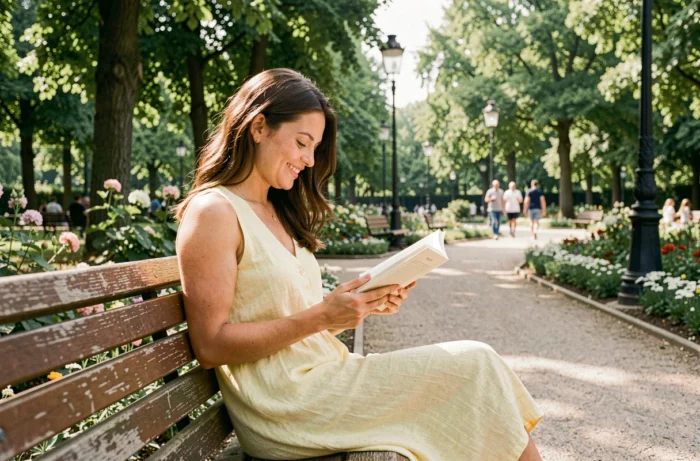
Not all Brussels parks receive the same amount of direct light. Orientation, tree cover density, and proximity to water bodies create distinct microclimates from one green space to another.
Bois de la Cambre offers vast south-facing clearings, but its shaded areas become dense as you move away from the central lawns. For prolonged afternoon sunshine, the Ixelles ponds remain more reliable: the clear banks capture light until late in the day.
Josaphat Park, located in Schaerbeek, has a different profile. Its bowl-shaped topography protects from wind while concentrating heat. It is a relevant choice when the temperature in the city does not exceed comfort thresholds.
Less crowded spots for suitable exposure
Two parks deserve the attention of visitors looking to avoid the saturation of popular places:
- Ten Reuken Park, a natural extension of Bois de la Cambre, has south-facing lawns with significantly lower foot traffic than the Ixelles ponds.
- The Sources Park combines low vegetation and the absence of surrounding buildings, ensuring uninterrupted sunlight for most of the day.
- Malou Park, in Woluwe-Saint-Lambert, features a reflective water body that amplifies the feeling of brightness even under a cloudy sky.
Place du Nouveau Marché aux Grains: an urban redevelopment to watch
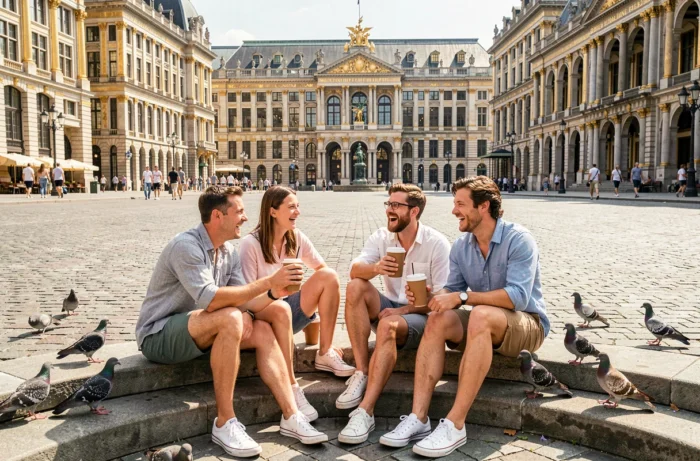
Brussels-City has presented a complete redevelopment project for the Place du Nouveau Marché aux Grains, with delivery expected in 2027. This project will transform a currently largely mineral space into a green square, removing parking spaces in favor of pedestrian zones.
For urban sunshine enthusiasts, this type of redevelopment profoundly changes the use of a square. Greening creates partial shade, of course, but the new open areas and the absence of parked cars free up ground seating spaces that current Brussels squares do not offer.
We observe that this movement towards pedestrianization is gradually affecting several neighborhoods in the center. The balance between vegetative shade and cleared sunny surface is becoming a real parameter of urban design in Brussels.
Cultural activities outdoors in Brussels: combining visits and sunshine
Enjoying the sun in Brussels is not limited to sitting on a lawn. Several cultural venues now incorporate an outdoor component that allows for staying outside while visiting.
Bozar, already mentioned for its rooftop, offers terrace access that extends the museum experience. The Kanal center, resulting from a partnership with the Centre Pompidou, opened its doors in a former Citroën garage, where the interior-exterior volumes blur the boundary between inside and outside.
Heritage and thematic days
The Heritage Days organized by the BELvue museum provide an opportunity to discover buildings that are usually closed, some of which have inner courtyards or exposed gardens. This occasional format offers solar access to normally inaccessible places.
The Belgian beer culture also invites itself outdoors. The Belgian Beer Culture Days take place in open air and allow for combining tasting and sunshine in the squares of the historic center.
Orientation and time slots: when the sun shines best in Brussels
Brussels sunshine follows a logic that locals know well but that visitors often underestimate. The Belgian capital benefits from a light peak shifted westward in summer, making late afternoons more interesting than early mornings for most spots.
West-facing terraces in the historic center capture low light well after the classic midday slot. High rooftops extend exposure by one to two hours compared to street-level terraces, thanks to the absence of shadow cast by neighboring buildings.
For an optimized day, we recommend starting with a park in the morning (Josaphat or Ten Reuken), moving to an open square in early afternoon, and then finishing at a rooftop to catch the last hours of light. This sequencing takes advantage of each sunny slot instead of enduring the shadow areas that progress throughout the day.
Brussels is not a Mediterranean city, and this is precisely what makes the hunt for sunny spots more technical than elsewhere. Every hour of sunshine is earned and planned, between opening times, facade orientation, and park topography.