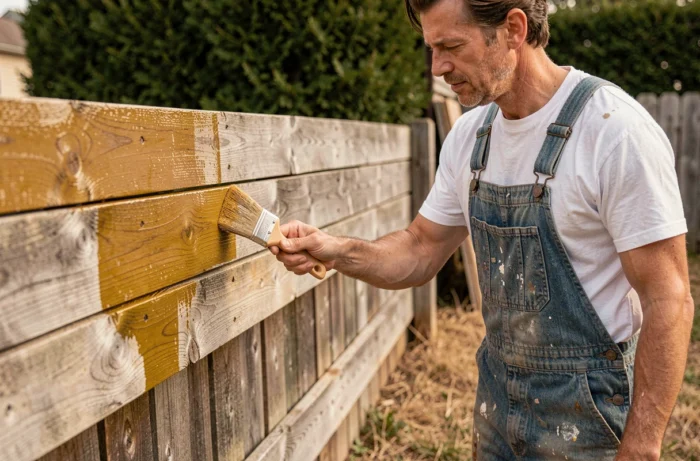
The Parkside polyurethane wood stain is a finishing product for wood distributed by Lidl under its tool brand. Its formulation combines a polyurethane resin with a base designed to penetrate the wood fibers, offering both color and protection against external aggressions. This type of stain is distinguished from traditional acrylic stains by the nature of its binder, which largely determines its durability over time.
Polyurethane resin in a wood stain: what it concretely changes
A stain relies on three main components: a binder (the resin), pigments, and a solvent (water or organic). The binder determines the film’s resistance once dry. In the case of the Parkside stain, the polyurethane resin forms a harder and more elastic film than a traditional acrylic or alkyd resin.
This increased hardness results in better abrasion resistance, a useful parameter on high-traffic surfaces like railings, shutters, or fences. The elasticity allows the film to follow the natural movements of the wood (expansion, contraction) without cracking prematurely.
For those looking for a review of the Parkside polyurethane stain based on field feedback, the polyurethane resin remains the most determining technical factor for its durability.
The downside: a polyurethane stain generally dries more slowly than a purely acrylic water-based stain, and its cleaning may require a specific solvent rather than just rinsing. This compromise between film performance and ease of use should be considered before purchase.
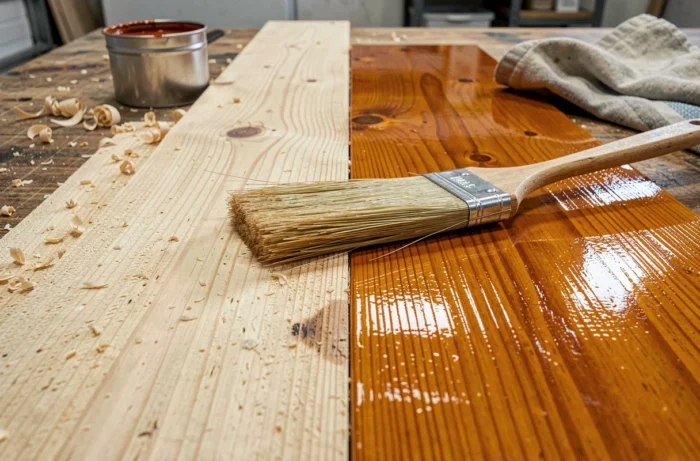
Parkside stain on exterior wood: adhesion and resistance to weather conditions
The main promise of a polyurethane stain concerns outdoor protection. Exposed wood undergoes three types of aggression: ultraviolet rays (which degrade lignin and cause graying), moisture (which promotes mold and rot), and thermal variations (which create mechanical stress).
UV protection and pigments
The pigments in the Parkside stain, available in a rosewood shade, filter part of the UV radiation. The darker the shade, the more effective the UV filtration. A colorless stain allows more rays to pass through and protects the surface for a shorter time, which shortens the interval between applications.
Water resistance and microporosity
Unlike a varnish that forms a waterproof barrier on the surface, a stain remains microporous. It allows the wood to breathe while limiting the penetration of liquid water. Parkside’s polyurethane formulation enhances this waterproofing without completely obstructing gas exchanges.
Adhesion largely depends on the preparation of the substrate before application. Clean, raw wood sanded with fine grain offers the best adhesion. On already treated wood, light sanding and dusting are necessary for the new coat of stain to bond properly with the old one.
Application conditions for Parkside polyurethane stain
The success of a stain does not solely depend on the product. The application conditions play at least as significant a role in the final result.
- The ambient temperature should remain moderate: neither too cold (the film does not dry properly) nor too hot (too rapid drying prevents good penetration into the fibers).
- The moisture content of the wood must be low. Damp wood traps water under the stain film and causes blisters or premature peeling.
- Applying two thin coats is preferable to a single thick coat. Each layer penetrates better, dries evenly, and provides more consistent protection across the entire surface.
- The drying time between coats, indicated on the container, must be strictly adhered to in order to avoid the second coat partially dissolving the first.
A soft-bristle brush or a lacquer roller is suitable for flat surfaces. Molding and corners require a trim brush to cover hard-to-reach areas without overloading the product.
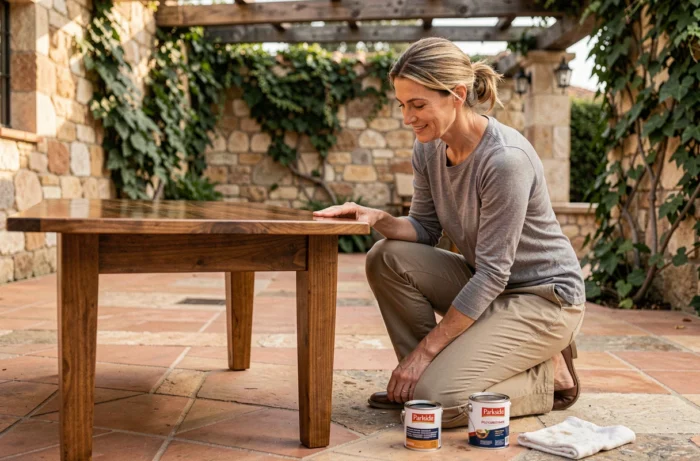
Polyurethane stain or acrylic stain: criteria for choosing the right product
The market offers a wide range of stains, and the question of choosing between polyurethane and acrylic frequently arises.
| Criterion | Polyurethane stain (type Parkside) | Acrylic water-based stain |
|---|---|---|
| Durability of the film | Superior, harder film | Fair, more frequent renewal |
| Elasticity | Good, follows wood movements | Variable depending on formulations |
| Cleaning of tools | Specific solvent sometimes necessary | Soapy water |
| Odor during application | More pronounced | Low |
| Indoor use | Possible, with ventilation | Well suited |
The Parkside stain positions itself as a versatile product, primarily designed for exterior woodwork but usable indoors provided there is adequate ventilation. Its quality-price ratio, linked to Lidl’s distribution, makes it accessible for large surfaces without excessive investment.
Biocide regulation and wood stain: a often overlooked point
As of January 1, 2024, professionals applying wood protection products classified as TP8 under the biocidal regulation (EU) No. 528/2012 must hold a specific Certibiocide certificate, valid for five years. This certificate, distinct from those required for disinfectants or rodenticides, conditions the regulatory compliance of the intervention on site.
For individuals, this obligation does not apply directly. It concerns the craftsman commissioned to apply the product. If the Parkside stain contains biocidal agents of type TP8, a non-certified professional risks non-compliance. The classification mention appears on the technical data sheet or the product label.
This regulatory point, rarely addressed in consumer product sheets, deserves verification before entrusting the application to a service provider. Requesting a copy of the Certibiocide during the quote ensures that the craftsman meets their obligations.