Finding a piece that holds up beyond three weeks of rotation in the wardrobe is the true test of a fashion trend this season. The autumn 2026 collections offer clear directions, but not all are worth investing in. We have sorted through to keep the elements that truly change the silhouette on a daily basis.
Structured materials and soft leather: what changes the outfit when worn
When you put on a soft leather jacket over a simple straight jean, the result is nothing like the same jean worn under a synthetic jacket. The material defines the style before the cut, and this season confirms that.
Lightweight leather, reworked to be thinner than in previous seasons, is now worn as a midi skirt or an open shirt over a tank top. We are moving away from thick biker-style leather. Soft leather replaces rigid leather in everyday silhouettes, including in dressed-up pieces.
For those who want to explore fashion on SAV 35, this is a good starting point: fine leather pieces pair well with tailored trousers as well as with raw denim.
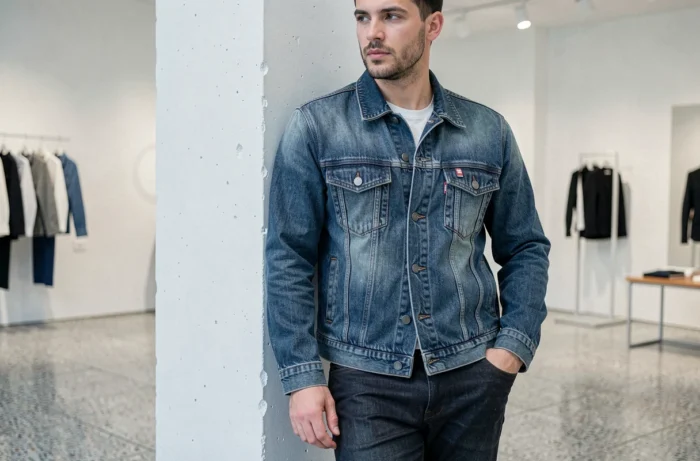
Thick linen and heavy denim complement this material direction. They are found in oversized but short cuts (cropped jackets, sleeveless vests) that structure the upper body without adding bulk. Returns on linen mid-season vary by region, but a lightweight lining solves the problem.
Colors of the season: butter yellow and muted tones
Butter yellow has been around since spring and shows no signs of fading. This shade works because it behaves like a warm neutral: it can be worn as a total look or as a single piece against a dark base without causing visual conflict.
Butter yellow functions as a basic, not as a color accent. A butter yellow sweater with beige trousers and white sneakers creates a cohesive outfit without the effort of coordination.
Muted palette for the rest of the wardrobe
Bright colors are not disappearing, but the most commonly worn shades for everyday remain in a muted register:
- Chartreuse green, which has seen a recent surge in online searches, brings energy without the stridency of classic neon green
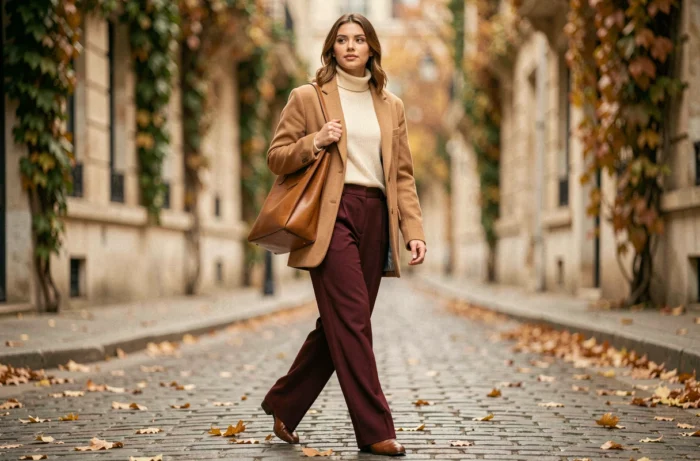
- Deep burgundy and chocolate brown form the backbone of autumn outfits, easy to mix with each other
- Pale pink persists in a faded version on knits and shirts, far from candy pink
Red remains a safe bet for a statement piece (a coat, a pencil skirt), but we use it sparingly: one red piece per outfit is enough to anchor the look.
Autumn 2026 silhouettes: loose cuts and controlled volumes
The barrel jean, with its wide cut at the thighs that narrows at the ankle, establishes itself as a credible alternative to the straight jean. It alters the leg/hip proportion in a way that flatters most body types, where skinny jeans crushed certain silhouettes.
It is worn with flat shoes (loafers, square-toed ballet flats) to maintain a clean line at the bottom. With heels, the barrel loses its visual balance and veers towards clown costume, a common pitfall.
The oversized blazer remains, but evolves
The loose blazer no longer surprises anyone, but current versions gain in precision. The shoulders drop less, and the length stops at the hip rather than mid-thigh. This correction makes the piece more wearable at the office as well as for outings.
A well-cut oversized blazer structures an entire outfit around it. The rest can be built with simple pieces: a plain t-shirt, straight trousers, derbies. The blazer does the work.
Fashion regulation 2026: what changes for brands and consumers
This season is also distinguished by a regulatory shift that directly affects labels and marketing campaigns. Starting from September 27, 2026, the European directive (EU) 2024/825 prohibits unproven generic environmental claims on clothing.
Specifically, terms like “eco-friendly,” “sustainable,” or “green collection” without recognized independent certification become illegal. “In-house” labels created by brands without external audits are now prohibited.
At the same time, the ESPR regulation (2024/1781) prohibits large European companies from destroying their unsold textiles since July 2026. Combined with extended producer responsibility systems for textiles, this framework pushes brands towards resale and repair circuits.
Concrete impact on shopping
For consumers, this means two practical things:
- Product sheets that display a “green” narrative without an official certification logo should raise suspicion, as they may potentially violate the law
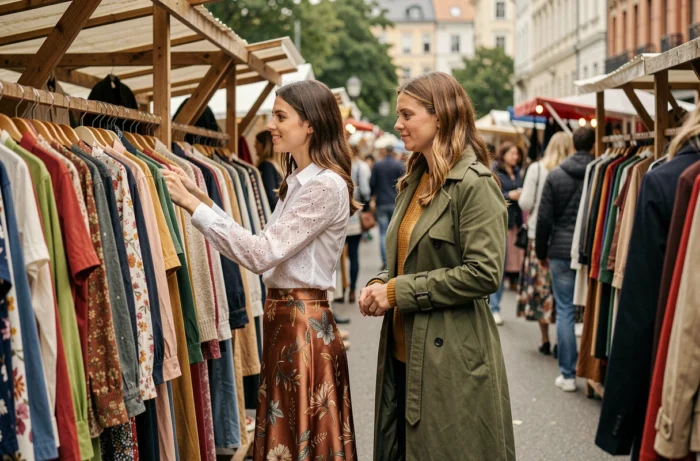
- The supply of second-hand and unsold items will mechanically increase, as brands can no longer destroy their surplus
- Clothing designed to last (reinforced seams, durable materials) gains visibility as they meet the new eco-design requirements
Adopting a unique style this season involves both the choice of pieces and reading labels. A wardrobe built on solid materials and cuts suited to one’s body type withstands trend rotations better than a wardrobe refreshed every three months. Soft leather, barrel jeans, tailored blazers, and a palette of muted colors form a concrete base that lasts the entire season.