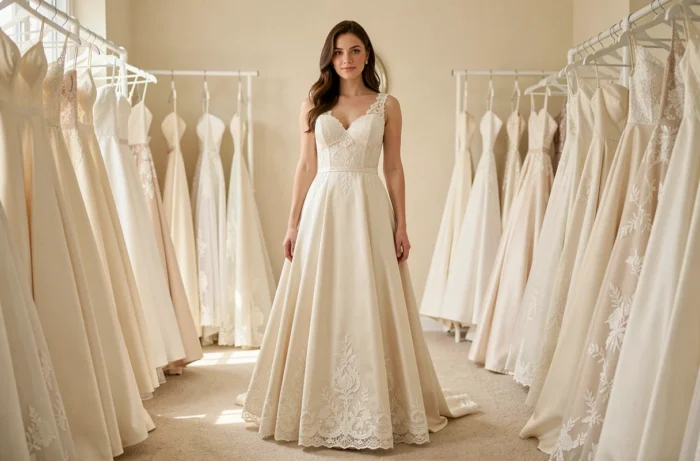
A wedding dress is primarily defined by its cut, fabric, and closure system. These three technical parameters determine the visual effect, comfort for an entire day, and the final budget. Before browsing catalogs or stepping into a showroom, understanding these basics allows for quickly eliminating unsuitable models and focusing fittings on truly relevant pieces.
Removable elements on a wedding dress: modularity as a selection criterion
Recent collections (2025-2027) increasingly incorporate removable pieces from the design stage: overskirts, capes, detachable sleeves, or interchangeable tops. The principle is simple: a structured base (sheath dress in crepe, fitted bodice) onto which elements are added to transform the silhouette.
This modular approach meets practical use. A wedding day is divided into distinct sequences: ceremony, cocktail, dancing. Instead of wearing the same outfit for ten hours or planning a second ensemble, a unique base with removable elements covers several looks.
During fittings, it is worth consistently asking if a model is available in a modular version. Future brides consulting the selections available on perlemaisondemariee.fr can spot this type of configuration even before visiting the store, saving valuable time.
A technical point to check: the fastening system for removable pieces (hidden snap buttons, hooks, textile magnets). A poor fastening system undermines the modular effect. Testing each configuration in the fitting room, including the quick removal of the overskirt or cape, avoids unpleasant surprises on the big day.
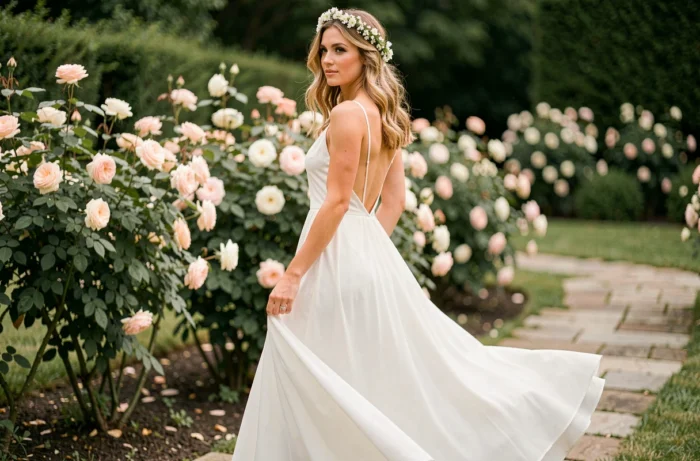
Reimagined corset and comfort: what changes in structured cuts
The corset is making a comeback in the 2026-2027 collections, but in a version very different from the rigid bodices of ten years ago. Designers like Rosa Clará now offer corsets designed to support posture without rigidity, featuring softer boning and internal panels that conform to the body rather than constricting it.
The technical distinction to know: a classic corset compresses the bust to create an hourglass silhouette. A reimagined corset uses cutouts and reinforcements integrated into the fabric to define the waist without excessive pressure. The visual result is similar, but the sensation when worn is entirely different.
Testing real comfort in the fitting room
Sitting down, raising arms above the head, simulating a few dance steps: these basic movements immediately reveal if the bodice is too constricting. A well-designed structured dress allows all these movements without the fabric riding up or the boning digging into the ribs.
Models with a defined waist and raised floral details, prevalent in the 2027 collections, add visual volume without weighing down the structure. This is an interesting compromise for brides who want an architectural silhouette without sacrificing freedom of movement.
Minimalism or volume: two approaches to the wedding dress according to budget
The current market is structured around two distinct poles, and identifying them early in the search clarifies choices.
- Minimalist dresses (crepe, matte satin, straight or slightly flared cut): few embellishments, no excessive volume. These models significantly reduce costs as they require less fabric and fewer hours of craftsmanship. They are particularly suitable for outdoor ceremonies or rustic weddings.
- Architectural dresses (reinforced bodice, flared skirts, applied lace): more material, more artisanal work, thus a higher budget. They are essential for formal ceremonies or venues that call for a voluminous silhouette (cathedral, castle).
- Modular hybrid dresses: minimalist base with the addition of removable elements to transition between styles. A middle ground that allows not to definitively choose between the two styles.
The choice between these three categories depends as much on the reception venue as on the budget. A minimalist crepe dress will not be well showcased in a Gothic nave, while a princess dress with a train would complicate a beach wedding.

Wedding dress fitting: technical mistakes to avoid
Most guides recommend coming with a companion and keeping an open mind. These recommendations are correct but insufficient. A few less frequently addressed technical points can change the quality of a fitting.
Wearing appropriate underwear seems obvious, but precision is often lacking: a properly sized strapless bra and a smooth shaping panty are the minimum. Specialized boutiques sometimes provide fitting corsets, but not always.
Managing light and mirrors
The light in the fitting room does not replicate that of the ceremony venue. An ivory fabric can appear yellow under warm lighting and look white under cool light. Asking to see the dress near a window, in natural light, gives a more reliable indication of the actual shade.
Photographing each tried model with the same framing (front, profile, back) allows for objective comparison afterward. Visual memory distorts: after four successive fittings, memories blend together. Systematic photos from the same angle prevent the need for a second, unnecessary appointment.
Last often overlooked detail: check the length of the dress with shoes of the same heel height as those planned for the wedding. A two-centimeter difference in heel height alters the line of the skirt and the fullness of the train, distorting the overall impression.
The choice of a wedding dress benefits from being approached as a technical process as much as an emotional one. Identifying the appropriate cut category for one’s budget and venue, testing the modularity of removable pieces, checking the real comfort of a corset in the fitting room: these concrete steps reduce the number of fittings and increase the likelihood of finding a dress that works throughout the day.