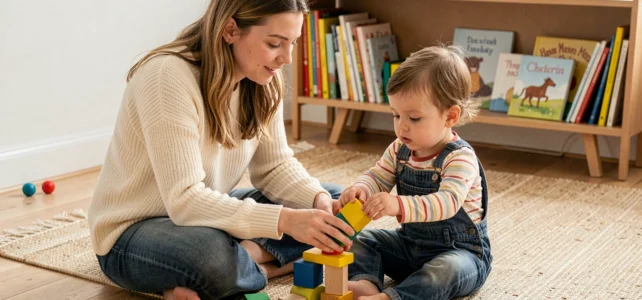
A child turning over the sandbox to observe the insects underneath, another dismantling an old clock on the kitchen table: curiosity is not planned, it is given space. The daily challenge for parents is not to multiply activities, but to spot the moments when the child is ready to absorb something new, and then to slide in without forcing.
Legal framework for screens for children: what has changed since 2024
Before discussing activities and tips, a regulatory point is necessary because it conditions the time available for everything else. Since April 2024, a report from experts submitted to the presidency of the Republic (Children and Screens: In Search of Lost Time) has established clear benchmarks: no screens before 3 years old, no smartphone before 11 years old, no internet-connected phone before 13 years old, no social media before 15 years old.
These recommendations have become binding. Since July 2024, smartphones, tablets, computers, and consoles sold in France must include a parental control device that can be activated from the first use. An order from June 27, 2025, prohibits screen exposure for children aged 0 to 3 years in nurseries and early childhood care settings. A law from January 26, 2026, establishes a legal benchmark: no social media before 15 years old.
In practical terms, we have a framework that harmonizes what happens at home and in the community. For parents, this simplifies discussions: the rule is no longer an isolated family choice, it is a shared norm.
This framework also frees up time to offer concrete activities to children, especially the youngest. By looking for practical resources on children on Mister Papa, you can find organized ideas by age group that take these new benchmarks into account.

Hands-on activities and free play at home: what really works
It is said everywhere that we should offer crafts, drawing, and nursery rhymes. The problem is not the idea, but the execution. A painting workshop with a 3-year-old rarely lasts more than twelve minutes. This is not a failure, it is normal.
Crafts and short activities suited to real attention spans
The classic trap is to prepare an overly ambitious workshop. Everything is set up, the child loses interest before the end, and we end up frustrated. It is better to plan three ten-minute activities than a single one-hour project. Here are a few formats that work well on a daily basis:
- Free collage with scraps of paper, leaves collected outside, a glue stick: no model to follow, the child creates as they wish and the result doesn’t need to be pretty.
- Water play in the sink or a basin (pouring, filling, emptying): this is sensory exploration that costs nothing and captivates children under 4 for a long time.
- Improvised motor courses with cushions, a chair, a cardboard tunnel: it mobilizes the body, works on balance, and expends energy before mealtime.
Free play, without instructions or objectives, remains the most underestimated. A child stacking boxes or lining up spoons by size is doing real cognitive work. There is no need to intervene, just not to interrupt.
Books and nursery rhymes: a ritual more than an activity
Reading aloud works better when it is predictable. Same time, same chair, same ritual. The child not only remembers the story, they remember the framework. Regularity matters more than the quantity of books. Three well-chosen picture books read twenty times are better than an entire library skimmed through.
Nursery rhymes play a similar role. They structure the day (morning rhyme, bath rhyme) and help the child anticipate transitions, which reduces conflicts related to changes in activity.

Sleep and evening routines: the foundation that parents neglect
There is a lot of talk about awakening activities and not enough about sleep. A child who sleeps poorly explores less, concentrates less, and tolerates frustration less. Sleep conditions the quality of everything that happens during the day.
The evening routine does not need to be long, but it must be stable. A sequence of bath, pajamas, story, cuddle, lights out works precisely because it does not change. Feedback varies on the ideal duration of this routine, but most families that maintain it between twenty and thirty minutes notice a quicker falling asleep.
A point often overlooked: brightness. We dim the lights in the house half an hour before bedtime, avoid screens (the legal framework helps here for the youngest), and reduce noise levels. The child’s body picks up these signals and begins to produce melatonin even before being put to bed.
Simple recipes to cook with children: a concrete lever for autonomy
Cooking with a child is slow, messy, and remarkably effective for developing fine motor skills, vocabulary, and self-confidence. We are not talking about elaborate baking. We are talking about mashing a banana with a fork, tearing salad leaves, mixing pancake batter.
A child who participates in meal preparation is more willing to eat what they have cooked. This is an underutilized lever with picky eaters. Here are some practical guidelines:
- Before 3 years: mash, mix, tear. We avoid knives, even so-called “child-safe” knives, and stay close by.
- Between 3 and 5 years: spread, roll, cut soft foods with a rounded knife. The child can also measure ingredients with a measuring cup.
- After 5 years: read a simple recipe together, weigh, pour, and start to understand the steps in order.
The secondary benefit is vocabulary. We name foods, textures, and actions. We compare (hotter, thicker, sweeter). This is language in context, much more effective than formal exercises.

The world of children is not built with a program. It is built with simple habits, a stable framework, and parents who accept that twelve minutes of gluing or a mashed banana with a fork is already a lot.