The BSR, now officially called category AM of the driving license, is not an exam in the traditional sense. There is no grading scale, no failing mark, no appointment at an examination center. The training is validated (or not) by the driving school itself. This particularity changes the nature of the risk of failure, but does not eliminate it.
Validation of the BSR by the instructor: a poorly understood mechanism
The most common confusion among candidates lies in the very nature of the evaluation. Unlike the B license or the highway code, category AM does not have a national test to retake. It is the driving school instructor who validates each sequence of the training and then issues the certificate.
In practical terms, if the instructor believes that the candidate’s control of the vehicle or behavior in traffic is insufficient, they can refuse to validate the training. The candidate will then have to take additional hours or even redo certain sequences. This scenario represents a financial cost and a delay that many candidates do not anticipate.
Knowing whether one can fail the BSR in 2025 thus comes down to asking whether the instructor can refuse validation, and the answer is yes. The most common reasons: instability on the platform, failure to respect priorities in traffic, or behavior deemed dangerous.
ASSR and administrative prerequisites: the blockage before training even begins
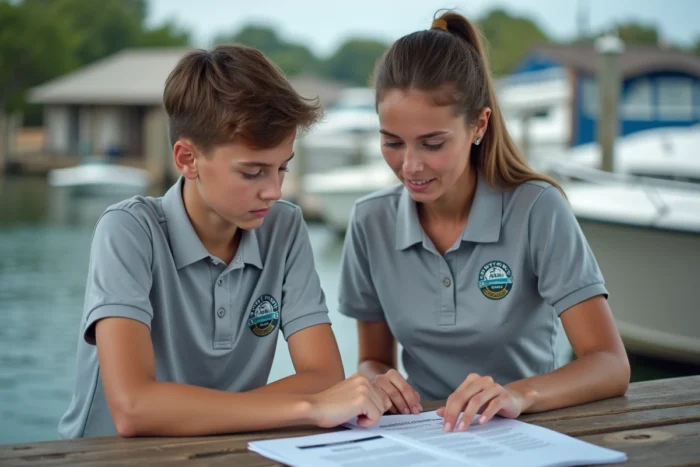
Before discussing success or failure on the ground, an administrative obstacle stops candidates each year. ASSR1 or ASSR2 is required to enroll in AM training. Without this certificate, the driving school simply cannot finalize the file.
ASSR1 is taken in the fifth grade, while ASSR2 is taken in the ninth grade. Candidates who have not kept their certificate, or who have not taken these tests (school dropout, schooling abroad), must obtain an ASR (road safety certificate) from a Greta or an accredited center. This process takes time and delays access to training.
For individuals born before 1988, the situation is different: no driving license is required to operate a moped or a light quadricycle. This generational exemption remains in effect in 2025.
Sequences of AM training: where the real difficulty lies
The practical training is divided into standardized sequences that cover distinct skills. Each can present specific difficulties:
- Off-road driving (platform): maneuverability of the scooter or small car, emergency braking, slalom. Candidates who have never touched a motorized two-wheeler lose time in this phase, especially on balance at low speed.
- Traffic driving: merging into traffic, managing intersections, respecting safety distances. The instructor observes the candidate’s actual behavior, not just their technique.
- Risk awareness: a theoretical sequence often underestimated, which addresses the bodily and legal consequences of an accident. The instructor may ask questions to verify understanding.
The traffic sequence is the one that generates the most non-validations. A candidate who is technically correct on the platform may find themselves destabilized by the stress of real traffic. The transition from a controlled environment to open road remains the most demanding leap in the training.
The time factor between sequences
Some driving schools offer accelerated training over one or two days. This compressed format leaves no room to assimilate the reflexes between sequences. Field feedback varies on this point: for candidates comfortable with driving, the intensive format works. For those discovering two-wheelers, spreading the training over several days allows for better gestural memorization.
Preparing for AM training: what makes the difference on the big day
Preparing for the BSR is not limited to “revising”. Since it is a practical validation, the preparatory work focuses on concrete reflexes.
Arriving having already pedaled on a bike in the city changes the game for traffic driving. Reading traffic, visual checks at intersections, managing blind spots: these skills transfer directly from bike to scooter. A candidate who has never ridden on the road, even by bike, starts with a real disadvantage.
The choice of driving school also matters. A driving school that offers real platform time before starting road training gives the candidate more chances. Conversely, training that goes on the road too quickly exposes candidates to non-validation.
- Check that the ASSR (or ASR) is indeed in your possession before enrolling, to avoid an administrative blockage
- Ask the driving school for the details of the schedule: number of hours on the platform, number of hours in traffic, duration of the awareness sequence
- Practice visual checks (mirrors, blind spots) in daily life, on foot or by bike
- Plan appropriate equipment on the day of training: approved gloves, closed shoes, covering clothing
The BSR is not “failed” like a traditional exam, but it may not be validated. The difference is subtle and has heavy consequences: no official retake session, only additional hours charged by the driving school. Anticipating the points of blockage (administrative, technical, behavioral) remains the most reliable way to obtain your category AM without increasing the bill or the timeline.