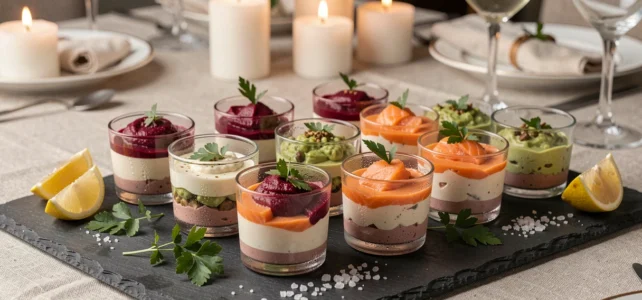
Savory verrines prepared the day before solve a classic problem: enjoying your guests instead of running to the kitchen. The principle relies on textures that hold up in the cold (mousses, velvets, tartares) and well-thought-out layers to prevent anything from getting soggy. Here are ten concrete recipes to assemble the day before, each with the logic that keeps the result intact until serving.
1. Parmesan panna cotta verrine with grilled pepper coulis
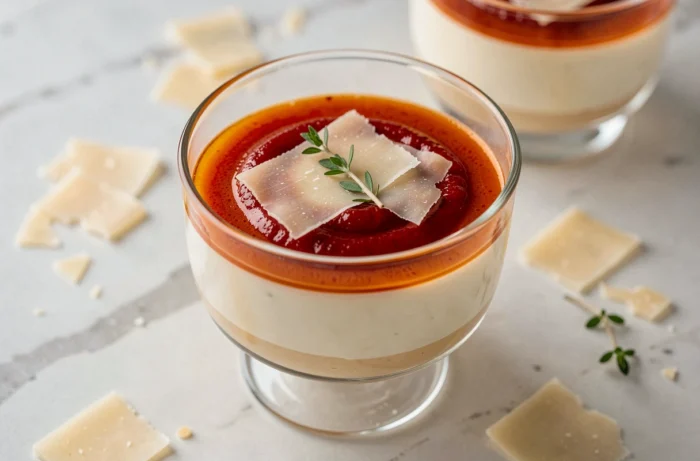
The savory panna cotta forms a gelatinous base that remains firm all night in the refrigerator. Mix warm cream with grated parmesan and a sheet of gelatin, then pour into your verrines. The grilled pepper coulis is added on top once it has set.
The gelatin prevents the layers from mixing overnight, ensuring a sharp visual contrast at serving time. If you’re looking for other combinations to prepare the day before, the recipes from Vidéos du Net detail several tested variations using the same cold-setting principle.
2. Smoked salmon mousse verrine with cucumber and dill
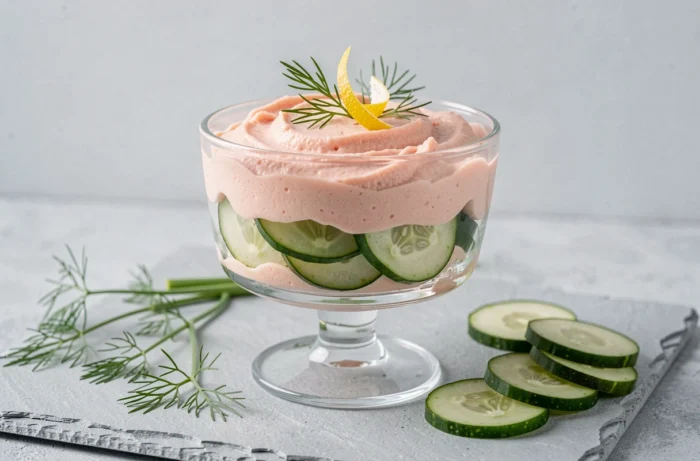
Blended smoked salmon with cream cheese and a splash of lemon creates a creamy mousse that does not oxidize. The diced cucumber, salted and drained, is placed at the bottom of the verrine to prevent it from releasing water into the mousse.
A small food safety detail to keep in mind: a verrine containing smoked salmon should not be left out of the refrigerator for more than two hours. Take the verrines out at the last moment, just before your guests sit down.
3. Beetroot cream and fresh goat cheese with walnuts verrine
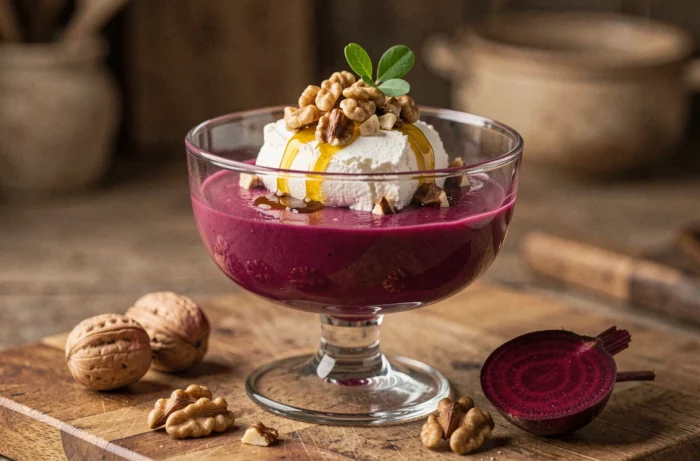
Cooked beetroot blended with a hint of balsamic vinegar produces a thick, naturally sweet cream. The fresh goat cheese is placed in small pieces on this base, and the crushed walnuts are added on the day itself to maintain their crunchiness.
Why not add the walnuts the day before? Because the moisture from the cream softens them within a few hours. Always reserve crunchy elements for the big day.
4. Guacamole and lime-marinated shrimp verrine
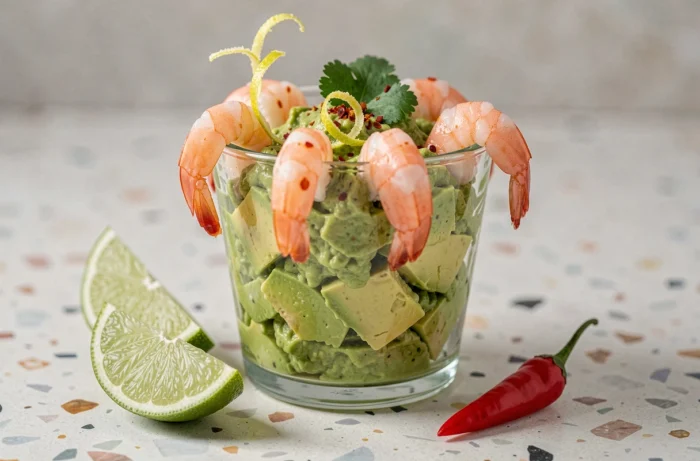
Avocado oxidizes quickly, but a simple trick changes everything: cover the surface of the guacamole with plastic wrap pressed directly against it, without air bubbles. The lime in the recipe also slows down browning.
Peeled shrimp, marinated in lime juice and a drizzle of olive oil, can easily be stored overnight in the refrigerator. Place them on the guacamole just before serving to keep their firm texture.
5. Butternut squash velouté and chorizo bits verrine

The butternut velouté holds up very well in the cold. Its naturally thick texture prevents it from becoming watery overnight. Pour it into the verrines, then cover with plastic wrap.
Pan-fried chorizo, cut into small cubes, can also be prepared the day before and stored separately in an airtight container. Assemble the velouté and chorizo at serving time to preserve the warm-cold contrast if you slightly reheat the velouté.
6. Tomato and mozzarella tartare with basil verrine
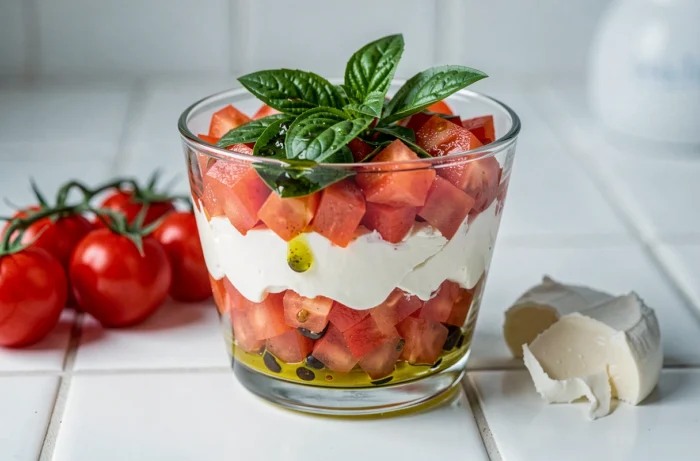
The tomato tartare works best with firm tomatoes, cut into small cubes and seasoned with olive oil, salt, and pepper. The mozzarella in small balls is placed in a separate layer.
Fresh basil turns black with prolonged contact with the cold. Keep it at room temperature and chop it just before serving directly on each verrine. This simple precaution completely changes the presentation.
7. Crab rillettes and avocado with Espelette pepper verrine
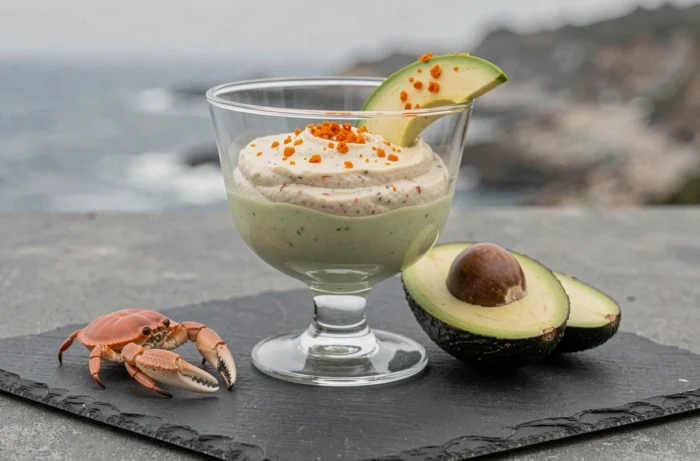
Shredded crab mixed with cream cheese, a bit of mayonnaise, and Espelette pepper forms rillettes that hold up well in the refrigerator. The layer of avocado underneath, protected by the rillettes, hardly oxidizes.
Always layer the fatty layer above the fragile layer: it acts as a natural protective film. This principle applies to most verrines prepared the day before.
8. Tuna mousse with lemon and a bed of confit peppers verrine
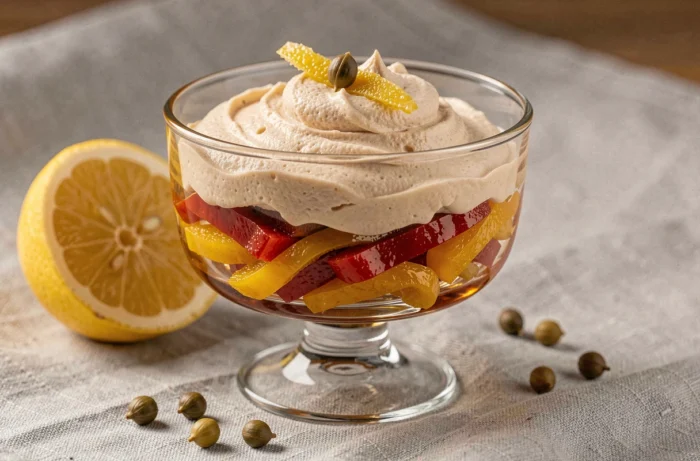
Canned tuna, drained and blended with cream cheese and lemon juice, creates a light mousse ready in minutes. The confit peppers (homemade or jarred) add a sweet note that balances the whole.
Have you noticed that some mousses become grainy after a night? This is often due to an excess of tuna compared to cream cheese. Aim for an equal balance for a smooth and stable texture.
9. Chickpea hummus and sun-dried tomatoes verrine
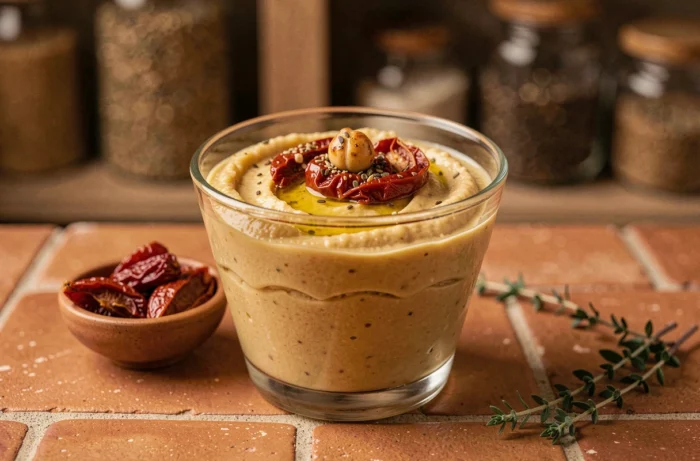
Hummus is probably the most stable base for a verrine prepared the day before. Its consistency does not change, it does not release water, and it pairs well with almost everything. The sun-dried tomatoes cut into strips add flavor and color.
This verrine is also suitable for guests following a plant-based diet. Always plan at least one option without animal products in your selection of verrines to accommodate everyone’s diets.
10. Tzatziki and zucchini tartare with mint verrine
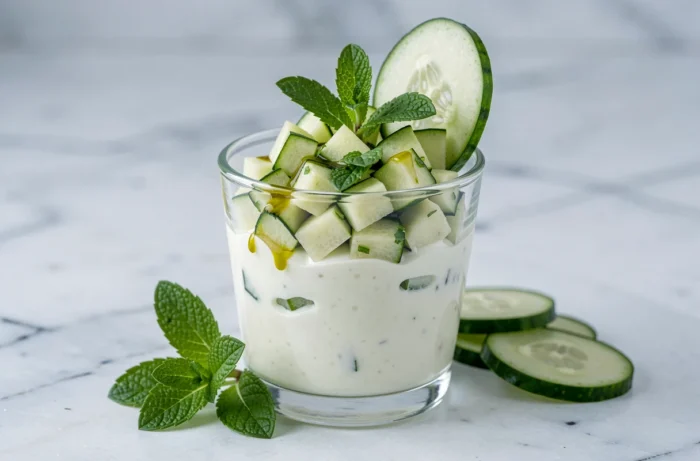
Homemade tzatziki (Greek yogurt, grated and drained cucumber, garlic, olive oil) forms a fresh, thick base. The raw zucchini cut into very small cubes, seasoned with chopped mint and a drizzle of lemon, is placed on top.
Be sure to drain the grated cucumber from the tzatziki by pressing it in a clean cloth. Without this step, water rises to the surface, and your verrine loses its neat appearance after a few hours in the fridge.
Whatever the number of verrines you prepare, keep three rules in mind:
- Crunchy elements (nuts, croutons, seeds, chips) are always added at serving time, never the day before.
- Each verrine should be individually covered with plastic wrap to avoid absorbing odors in the refrigerator.
- The refrigerator temperature should remain around 4 °C: a verrine containing fish or dairy products cannot withstand a poorly set fridge.
With these ten recipes, you spend the evening with your guests instead of behind the counter. The bulk of the work is done the day before, and on the big day, it comes down to taking out the verrines, adding the garnishes, and serving.